Discipleship Training That Multiplies: A Disciple-Making Movement Model for Ordinary Christians and Churches
Last Updated: February 24, 2026
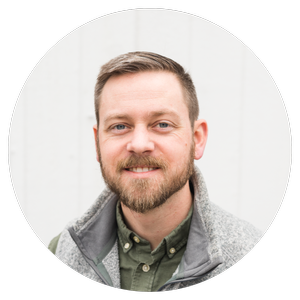
In 2018, Jeremy McCommons invited 10 guys to a bi-weekly study over video call. No platform. No funding. No plan. He wasn't a pastor. He had no seminary degree. He just knew that nobody had ever actually walked him through what discipleship looks like — and he was tired of that being true for everyone around him too.
That first group multiplied. Then the next group multiplied. Then groups he never started, led by people he never met, began making disciples in states he'd never visited.
That's not a program. That's a movement. And it's still how it works.
The Problem Isn't Apathy. It's the Absence of a Process.
Most churches want discipleship to happen. They preach about it. They build programs around it. And then the same people go through the another study, finish, and ask what they're reading next. Few become equipped to lead. Nobody sees 2nd, 3rd, or 4th generation groups multiplied. very few rarely disciple anyone who goes on to disciple someone else.
That's not a staffing problem. It's a model problem.
Only 5% of U.S. churches have a reproducing disciple-making culture (Discipleship.org). Ninety-three percent of pastors say they value discipleship — but only 28% have a clear process for it (Barna, State of Discipleship). Most churchgoers say their spiritual growth feels stagnant or shallow.
You can read more of the research at ordinarymovement.com/library/church-stats.
The answer isn't another program or curriculum. It's ordinary men and women who've grown in intimacy with Jesus — and from that intimacy, stepped into the calling to lead others. That's how cultures shift. That's what this is built around.
It Starts With Intimacy. Everything Else Flows From There.
Before we talk about multiplication, we need to talk about what makes it possible.
Ordinary Movement is built on three core values, and the order matters: Intimacy with Jesus. Intentional Relationships. Multiplication.
Intimacy comes first — not as a warm-up, but as the foundation. If we can only accomplish one thing through OM, it must be pointing people to a real, personal relationship with Jesus. From that intimacy, calling emerges. From that calling, a lifestyle of disciple-making follows — not out of obligation, but out of love.
This is why 99% of participants report growth in their intimacy with Jesus after going through the process. That's the number we care most about. Everything else — the groups, the generations, the geographic spread — flows from that relationship.
Multiplication isn't the formula. It's the fruit.
What Kind of Model Is This?
Ordinary Movement is a hybrid DMM model — a Disciple-Making Movement framework designed to work inside existing churches, not outside of them.
A Disciple-Making Movement (DMM) is the rapid reproduction of disciples that produces at least four generations of multiplication — decentralized, not reliant on any single leader or staff member, but on an entire community taking ownership. Most DMM frameworks were built for house church contexts. They're powerful. But they weren't built for the American church.
That's the gap Ordinary Movement fills.
We unintentionally began living out the principles of DMM, then intentionally built upon our existing process — seeing generational multiplication, decentralized leadership, ordinary people equipped for mission — and built a simple, repeatable process that anyone can start anywhere. A home. A coffee shop. A church building. A video call. The process is the same whether you're a bivocational pastor in rural Virginia or a stay-at-home mom in a suburb of Denver. You don't deploy it from the top down. It grows from the ground up — one willing person at a time.
It's not a product you order and install. It's a movement that starts with one yes.
It's also not a Bible study. It's not a curriculum to consume. It's a 27-session discipleship process for small groups built for multiplication — from the first session to the last — following the 2 Timothy 2:2 pattern Paul lays out in a single sentence: "The things you have heard me say... entrust to reliable people who will also be qualified to teach others." Paul → Timothy → Faithful People → Others. Four generations in one verse. That's the architecture of everything we build.
How It Works — And Why Most Small Groups Don't
Here's what typically happens in church small groups. A group forms. They study a book. They finish. They ask, "What's next?" The same people stay together, consume more content, and nothing multiplies.
That's not discipleship. That's consumer Christianity.
Ordinary Movement is built to break that cycle — structurally, not just philosophically.
One leader gathers 1–10 people and commits to 27 sessions over 6–12 months. The group works through four modules in order — Foundation, Core Values, Holy Spirit, and Discipleship Principles. The order matters. Intimacy with Jesus comes first. Everything else builds from there. By Session 17, participants are leading sessions themselves. By Session 26, every participant has been asked one question: Who has God placed in my life that I could disciple?
Session 26 is not an ending. It's a sending.
When the group finishes, it doesn't dissolve — it shifts. The original group becomes an OC Group: lightweight, peer-led, no curriculum. Just two questions at every meeting: "How is your heart?" and "What is God saying to you, and what are you going to do about it?" That keeps people connected without letting the group become a permanent huddle.
From there, participants who feel called step out and launch their own groups. The original leader shifts from leading to mentoring — staying invested without managing. As David Watson writes in Contagious Disciplemaking, "Mentoring is the intentional relationship with others that causes all parties involved to grow in discipleship."
Second-generation groups begin. Then third. Then fourth. Then fifth. Groups launch that the original leader never started, led by people they may never meet. The movement grows without anyone holding it together from the center.
That's not a program. That's 2 Timothy 2:2 in motion.
What We're Seeing: 2025 Stats and Lifetime Growth
The model works. Here's what the data shows.
In 2025 alone, 159 new groups launched — up 224% from 49 in 2024. An estimated 957 new participants went through the process, up 510% from 157 the year before. Twenty-three groups multiplied in-house, meaning a participant finished, became a leader, and launched their own group — bringing the lifetime total of multiplied groups to 116. We added 7 new states and 5 new countries.
Of those 159 groups, 158 were led by ordinary men and women, non-staff, non-paid. That's 99% volunteer-led — the movement is in the hands of ordinary people, not a team holding it together from the center.
As of December 2025, since the first group in 2018, 1,702+ participants have gone through the process. 288+ discipleship groups have launched across 36+ states. And 99% of participants surveyed report growth in their intimacy with Jesus — the highest percentage in the history of our movement.
Who This Is For
If you're an ordinary believer who wants to make disciples and doesn't know how to start — this process gives you a clear path. You don't need a theology degree. You don't need to be on staff. You need to be someone who's been with Jesus and is willing to lead a small group through a process that works. (No prior small group leading experience is necessary as our Leader Guide, Leader Training Course, and Coaching Videos will guide you through every session.)
If you're a church leader or pastor who wants discipleship training that produces disciple-makers — not just attenders — this is a process your people can run without you managing it. It's decentralized by design. Ordinary people lead it. It grows from within your congregation, from the inside out.
We have three tracks ready: Ordinary Men, Ordinary Women, and OM Co-Ed Groups. All three follow the same 27-session process, adapted for each context.
Start a Group — and begin where every OM group begins: with one person willing to say yes.
What We're Building Toward
Our long-range goal is to reach one leader from every church in the USA by 2034. Not by becoming a large organization. By becoming a grassroots movement from within local churches — through ordinary men and women who've become disciples that make disciples.
It started with 10 guys on a video call. Those guys multiplied. The people they discipled multiplied. And now there are groups in 36+ states and seeing rapid growth.
That's Acts 4:13.
"When they saw the courage of Peter and John and realized that they were unschooled, ordinary men, they were astonished and they took note that these men had been with Jesus."
Unschooled. Ordinary. But they'd been with Jesus.
That's who we're building this for. And that's who God keeps using.
We don't need more professional Christians. We need more ordinary disciple-makers.
Ordinary Movement is a hybrid DMM discipleship training process for small groups, active in 36+ states. Since 2018, 288+ groups have launched through men's discipleship, women's discipleship, and co-ed discipleship groups. Learn how to bring this to your church. Last Updated: February 24, 2026.