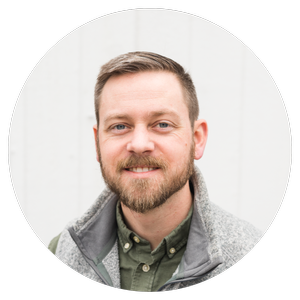
How One Ordinary Believer Started a Discipleship Training Movement
If you've ever thought, "I know I'm supposed to make disciples, but I don't know where to start" — this is the story behind the tools you're looking for. If you're a leader tired of Bible studies that produce knowledge but not life change, keep reading. This is how Ordinary Movement began — and why it works the way it does.
You're not alone in feeling that gap. According to Barna Group research, 93% of pastors say discipleship is a priority — but only 28% say their church has a clear process for it. And Discipleship.org found that fewer than 5% of U.S. churches have a reproducing disciple-making culture. That's the environment this story comes from. Not a boardroom. A rental house in Colorado.
The Restless Tug
Before any of this existed, I was a businessman. Entrepreneur. Probably addicted to the hustle. I had several businesses and, by the world's standards, I was doing well. But there was this restless tug I couldn't shake. The Lord was pulling me away from building the Kingdom of Jeremy and toward building His Kingdom.
I wrestled with that for years. I'd ask God, "What do you want me to be doing for You?" Sometimes I felt guilty, like I wasn't doing enough. Those feelings weren't healthy, but I was searching. I wanted to find the thing God had for me.
So I took a six-month hiatus. My family and I went to Colorado with one goal: do nothing. Pull away from work. Spend time with my family. Spend time with the Lord.
Why Nobody Showed Me a Real Discipleship Process
The short version: I'd been in church my whole life. I'd heard the word "discipleship" hundreds of times. But nobody had ever walked me through what it actually looks like.
At that point, I had no real relationship with the word "discipleship." I'd heard it in church, but nobody had ever discipled me. I'd had mentors — people ahead of me that I pursued for advice. But discipleship is different.
Mentorship is you pursuing the person ahead of you. Discipleship is the person ahead of you pursuing you. It's when someone further along makes it their responsibility to find someone younger and bring them along — so they can live a holy life and avoid the pitfalls the older person fell into.
This distinction matters more than most churches realize. Dallas Willard put it this way in The Great Omission: the Great Commission has become the Great Omission because churches affirm discipleship in theory but have no mechanism to practice it. That's what I was living.
I also carried a lot of frustrations with the Church. I saw a front door and a back door that were the same size — new people coming in, mature believers leaving because they were starving for something deeper. I saw a model where a great preacher performs on stage, and the congregation thinks, "I won't share the gospel with my neighbor because that's uncomfortable. I'll just invite them to hear the professional do it."
I saw many people who believed in Christ but very few who were actually following the life of Jesus.
The numbers back this up. Pew Research has documented that over 40 million Americans have disaffiliated from Christianity since the 1990s. And Barna found that only 17% of Christians can even identify the Great Commission. We weren't making disciples. We were making audiences.
I was tormented by that. I could have gone on social media and bashed people. Instead, I took it to prayer. And from that place of frustration, God gave me a vision to do things differently — not to call anyone out, but to build a discipleship process that was missing.
Before Any Discipleship Group Started: The Secret Place
Before I could build anything for others, God had to rebuild something in me.
Before the first group ever started, a friend named Jeremy Duggins (now a pastor at Revived Church in Fredericksburg, Virginia) challenged me. He introduced me to a book by Bob Sorge called Secrets of the Secret Place. That book changed my life.
I grew up in church, but I didn't have an intimate relationship with Jesus. I saw Him as God "up there" and me "down here." I would study Him, but I didn't think He actually wanted to be with me.
As I began to pursue intimacy, the Lord revealed something I couldn't earn: His approval.
The first thing He told me was: "Stop doing." Not "do more for Me." Just "be with Me." I had been volunteering four Sundays a month, doing a dozen other things to earn God's favor. He stripped all of that away to show me He loved me without any of it.
It was only from that place of rest and approval that a true calling could be born.
This is why intimacy with Jesus is the first core value of Ordinary Movement — not strategy, not curriculum, not even multiplication. We grow in the secret place before we grow in public. Everything else flows from there.
"Just Start" — How Our First Small Group Discipleship Began
Two or three months into our Colorado sabbatical, I was downstairs in our rental house. My wife and I had the Hillsong Channel on upstairs. I wasn't even listening. But suddenly a voice came through like a microphone in my ear. It was Joyce Meyer. She said, "Everybody thinks I started this ministry with thousands of people in auditoriums. But I started with a Bible study in my church. God told me, 'Just start.'"
The Holy Spirit hit me hard. I was so prideful that I thought if God was going to use me, it had to be something big. But the Lord said, "I rarely start with big. I start with your faithfulness. Show me you are faithful."
In mid-2018, I invited 10 guys to a bi-weekly study over video call. Ten of them said yes.
That was the beginning. No platform. No funding. No plan. Ten guys and a calling.
"Ordinary" Became a War Cry
One of those men, Chad Webb, suggested we call it the "Rocky Mountain Bible study." But I felt a conviction from the Lord. He told me, "You would never start a business and just call it 'The Business.' If you want Me to bless this, name it. Treat it as something I can bless."
I kept telling the guys in the group, "I'm just an ordinary guy. Don't take what I say as gospel. I'm just ordinary." I was using "ordinary" as an excuse for my insecurity.
Then the Holy Spirit showed me through the Word that being ordinary is not an excuse. It is a war cry.
I looked at Saul, who was looking for donkeys when he was called. David, who wasn't even invited to his own anointing because his family didn't think he mattered. Moses making excuses about his stuttering. Gideon hiding in a winepress.
"When they saw the courage of Peter and John and realized they were unschooled, ordinary men, they were astonished and they took note that these men had been with Jesus." — Acts 4:13
That is our identity. When an unschooled, ordinary person spends time with Jesus, it astonishes the world.
Shortly after, my daughter — about seven or eight at the time — came into the garage of our new house in Colorado. She had found a book on a shelf left by the previous owners. A book I had never mentioned to her. It was 12 Ordinary Men by John MacArthur. She held it out and said, "Dad, I think this book is for you."
I knew in that second our name was Ordinary Men.
More Than a Discipleship Curriculum — A Way of Life
Every session comes from something I had to learn the hard way. This isn't theory. It's testimony.
What we do today is the exact same study we did with those first 10 guys, minus two sessions we added later. The process is 27 sessions across 4 modules. Each session is a piece of my own life journey.
I had to learn that excuses are no excuse. I had to learn that failure is the story of how God uses messed-up people. I had to learn about the Holy Spirit and the high-challenge, high-grace nature of Jesus.
Here's why this matters: the reason most Bible studies fail to produce change is that they focus only on knowledge. A mature believer isn't the one who knows the most. It's the one who is most faithful with what they do know. If you've only read the Gospels but you actually do what Jesus says, you are more mature than a seminary professor who does nothing with his knowledge.
We study the Word so we can live like Jesus. Every session ends with the same question: "What is God saying to you, and what are you going to do about it?"
During that first group, the Holy Spirit gave me the 7 Principles of Discipleship in about five minutes:
Accept Him
Know Him
Obey Him
Make Sacrifices
Share Him
Love Others
Make Disciples
I challenge anyone to find a component that's missing. It didn't come from me. It came from the Lord.
These seven principles map to the arc of Scripture — from the first step of faith to the Great Commission in Matthew 28:19-20. They aren't a checklist. They're a progression: intimacy first, then calling, then multiplication. That order matters.
From a Men's Discipleship Group to a National Movement
About a year and a half in, we had a dinner at Chad and Emily Webb's house. Emily looked at the change in the men's discipleship group and said, "I wish we had something like this for women." I told her I'd build the study if she'd lead the group.
I didn't have to rewrite much. God's Word isn't geared toward men or women — it's geared toward people. But I knew I wasn't the one to lead a women's discipleship movement. I prayed for a year that the Holy Spirit would move Emily's heart to direct it. I never asked her. I didn't want her doing it for me. I wanted her doing it for Jesus.
When she finally called and said, "I think I'm supposed to be the Director," I told her, "I know. I've been waiting for you to say that."
As we grew, having "Ordinary Men, Inc." as our legal name created silos. People thought the women's track was secondary. We needed to be unified. We chose Ordinary Movement because it says exactly what we are: a movement, not a club. Today we offer discipleship groups for men, women, and co-ed teams across 35+ states.
Where it stands now: Since that first group of 10 in 2018, Ordinary Movement has grown to 245+ discipleship groups and 1,629+ men and women. We've seen 2nd, 3rd, and 4th generation groups multiply — meaning the people who were discipled are now discipling others, who are discipling others. 99% of participants report growth in their intimacy with Jesus. That's what matters most.
A Culture of Purity
I want to be clear about the culture of this organization — for generations to come. I've seen too much "celebrity pastor" culture. It bears no resemblance to Christ.
A few non-negotiables for as long as I'm at the helm:
I take zero dollars from Ordinary Movement. I fund it at the highest level I can. If I get paid for a speaking engagement or write a book, 100% of that money goes back to the ministry. There will never be a personal brand website selling products for my benefit.
We don't fundraise by talking you into giving through five-part sermon series. If God wants to fund this, He can move the hearts of men. We make the need known. We don't manipulate.
We are pastor-championed and ordinary-led. We aren't here to replace the church or bash pastors. We want to be the wind in their sails. I would hate to pastor 5,000 consumers who just watch me perform. I would much rather pastor 5,000 contributors who are out discipling others — so that when a crisis hits, they call their discipleship group before they even need to call their pastor.
Why the Origin Story Matters
Every organization drifts when people forget how it started. The "why" of the beginning dictates the strategy of the future.
As Peter Drucker put it, “culture eats strategy for breakfast.” All the growth plans in the world are worthless if you lose the heart of why you started.
A friend of mine, John Horn Kates, started a Christian school called Vail Valley Christian High School. That school fought through years of battles and struggles. Today it's thriving. When someone shared the story of how it began, the students changed. They started picking up trash off the floor — not because they were told to, but because they knew they were part of a legacy.
I don't want us to forget our humble beginnings. A few years from now, Ordinary Movement might have thousands of groups. It might look like a big organization. But if we forget why God called us to this, we lose the spark.
My hope is that even when I'm long gone, someone can look back at these words and be inspired by what God called us to from the start.
One Last Thought
If we were sitting down for coffee and you asked me what matters most, I wouldn't tell you it's about a process or a program.
It's about your intimacy with the Lord.
Use the Ordinary Movement tools. Use the workbooks. Let us handle the admin and the structure. But all of that is secondary to falling in love with Jesus. Stop going through the motions. Live in the freedom of what He has already done.
When you draw close to Him, He will put a calling on your heart. Follow that calling — not to earn something, but because you are already loved.
Ready to lead your first discipleship group? Start a Group.
Let's be the movement.
About the Author
Jeremy McCommons is the founder and CEO of Ordinary Movement, a nationwide discipleship movement that equips ordinary believers to lead small group discipleship. Before starting OM in 2018 with a single group of 10 men on a video call, Jeremy was an entrepreneur and business owner. He has no seminary degree and no ministry background — which is the whole point. He lives in Colorado with his family. Learn more at ordinarymovement.com.