How Disciples Actually Multiply: The Discipleship Process Behind a Growing Movement
You've heard "make disciples." But nobody showed you what that looks like past the first group. Here's the full lifecycle — from one small group to multi-generational multiplication. This isn't theory. It's what's happening right now across 35+ states.
What We Mean by Movement
Ordinary Movement exists for one purpose: to make disciples who make disciples.
Here's what that actually means. Our primary goal is to help people grow in intimacy with Jesus. From that intimacy, calling emerges. From that calling comes a lifestyle of disciple-making.
This is not a discipleship program to complete. It's not a curriculum to consume. It's a discipleship process designed to produce multiplication — but multiplication that flows from relationship with Christ, not obligation.
"They realized that they were unschooled, ordinary men… and took note that these men had been with Jesus." — Acts 4:13
That's our name. That's our identity. Ordinary people who've been with Jesus.
And in 2 Timothy 2:2, Paul lays out four generations in one sentence: Paul → Timothy → Faithful People → Others. We built everything around this.
This is also the engine behind what missiologists call a Disciple Making Movement — or DMM. The concept isn't new. David Watson and Paul Watson documented it in Contagious Disciple Making: when ordinary people are equipped with a reproducible process and empowered to lead, multiplication becomes the natural outcome. That's the pattern we follow.
Who This Is For
If you've ever thought, "I want to make disciples, but nobody ever showed me how" — this is for you. If you're a small group leader wondering why your group finishes a study and nothing changes — this is for you. If you're a pastor looking for a discipleship pathway your people can actually lead without you managing it — this is for you.
You don't need a theology degree. You don't need to be a pastor. You need to be willing.
Firefighters lead these groups. Teachers. Business owners. Stay-at-home moms. Nurses. Retirees. People who said yes and discovered they could lead something that changes lives.
The need is real. Barna research found that 93% of pastors say discipleship is a priority — but only 28% say their church has a clear process for it. And according to Discipleship.org, fewer than 5% of U.S. churches have a reproducing disciple-making culture. That's the gap this process was built to close.
The Complete Discipleship Lifecycle
Here's the full picture before we break it down. This is the path every group follows — from launch to multi-generational multiplication.
Phase What Happens 1. Launch A leader gathers 1–10 people and commits to 27 sessions together over 6–12 months. 2. Cultivate The group works through four modules: Foundation, Core Values, Holy Spirit, and Discipleship Principles. Intimacy with Jesus comes first. Everything else flows from there. 3. Finish Session 26 isn't an ending. It's a sending. The group shifts into a disciple-making team. 4. Transition Group becomes an OC Group — lightweight, peer-led. Focused on intimacy with Jesus and missional living. 5. Multiply Participants step out to lead their own groups. These become 2nd generation discipleship groups. 6. Mentor 1st gen leader shifts to supporting 2nd gen leaders through OC Group and personal connection. 7. Multiply Again 2nd gen leaders mentor their participants. Multiplication continues generationally. 3rd, 4th gen+ groups launch.
Now let's break each phase down.
Phase 1: It Starts with One Yes
Every movement begins with one ordinary person saying yes.
A first-generation leader gathers a small group — typically 1–10 people — and commits to walking through the 27-session discipleship process together. The group meets weekly (about 6–7 months) or bi-weekly (about 12 months). Twelve months is best.
This works for men's discipleship groups, women's discipleship groups, and co-ed groups. Same process. Same core values. Different tracks built for different contexts.
The 27-Session Discipleship Journey
The workbook is organized into four modules:
Foundation (Sessions Intro–5) — Your Story, Excuses Are No Excuse, Milk vs. Meat, What a Failure, plus review.
Core Values (Sessions 6–12) — Intimacy with Jesus, Intentional Relationships, Multiplication, The Blood of Christ, The Cross, Spirit/Soul/Body, plus review.
The Holy Spirit (Sessions 13–16) — Holy Spirit Parts 1–3, plus review.
Discipleship Principles & The Send (Sessions 17–26) — Accept Him, Know Him, Obey Him, Make Sacrifices, Share Him, Love Others, Make Disciples, Urgency: A Call to Action, The Send.
What Happens During a Discipleship Group
Throughout the 27 sessions, participants journey through three core values. The order matters.
Intimacy with Jesus. This is the primary core value. Everything else flows from here. We're building a deep, personal relationship with Christ in the "secret place." From that intimacy, calling emerges.
Intentional Relationships. Learning to do life together with purpose — not surface-level fellowship. Real community that costs something.
Multiplication. This is the fruit, not the formula. Multiplication flows from calling, and calling flows from intimacy. We give people the tools to live out a lifestyle of disciple-making as a natural result of their relationship with Christ — not as an obligation.
By Session 17, participants begin leading individual sessions themselves (though many start as early as Session 4). It provides low-stakes discipleship training within a safe environment. By Session 26, every participant has been challenged to consider: Who has God placed in my life that I could disciple?
That's the question that changes everything.
Phase 2: The Critical Transition
This is where most discipleship efforts die. The group finishes — and nothing happens next. We designed our process so something always happens next.
When a group reaches Session 26, they arrive at the most important moment in the entire process.
This is not an ending. It's a sending.
Here's what typically happens in church small groups: A group forms. They study a book. They finish. They ask, "What's the next study?" The same people stay together, consume more content, and nothing multiplies.
That's not discipleship. That's consumer Christianity.
This is the cycle that Robert Coleman identified decades ago in The Master Plan of Evangelism: churches invest in programs rather than people, and the result is audiences, not disciples. Jesus didn't build a program. He invested in twelve ordinary people and sent them out.
Ordinary Movement's discipleship process is designed to break this cycle.
When your group finishes, two things should happen:
Transition to an OC Group. The original group shifts into a lightweight, peer-led OC Group that keeps people connected while creating space for multiplication.
Launch new discipleship groups. Participants who feel called step out and lead their own groups. These become second-generation groups, and the multiplication begins.
If you're a pastor or church leader wondering how this fits your context, see our church discipleship pathway. It's built so your people lead it — not your staff.
Phase 3: OC Groups — The Ongoing Community
OC Groups (Ordinary Community Groups) are simple, peer-led gatherings designed to sustain community and mission after the original discipleship group finishes. They are not a replacement for discipleship. They are an incubator for ongoing disciple-making.
Structure is lightweight. No single leader carries the burden. No curriculum required. Frequency is flexible — weekly, bi-weekly, or monthly. If you miss, you're never behind.
The Two Core Questions
Every OC Group meeting centers on two questions:
"How is your heart?"
This goes beyond surface-level. It invites real, vulnerable sharing about what's happening spiritually.
"What is God saying to you, and what are you going to do about it?"
This keeps the group mission-focused and action-oriented. It's also the same question asked at the end of every session in the 27-session process — so it carries continuity from the original group into the ongoing community.
Why OC Groups Don't Compete with Multiplication
This is the biggest danger with any ongoing group: it becomes the main thing. People get comfortable, stay together, and never multiply.
OC Groups are designed to prevent this. The frequency is intentionally light so it doesn't consume margin needed for leading new groups. The OC Group serves as a "team huddle" where members encourage each other as they step into leadership. When someone launches their own group, that's celebrated — not treated as someone leaving.
Think of it this way: the OC Group is not the destination. It's the launching pad.
Phase 4: Multiplication in Motion — How Discipleship Groups Grow
This is where the movement takes shape.
You → Your Group (1st Gen) → Their Groups (2nd Gen) → Their Groups' Groups (3rd Gen) → Multi-Generational (4th Gen+)
As participants from the first-generation group step out to lead their own discipleship groups, the momentum begins. You launch your first group. You lead participants through 27 sessions. The group finishes and transitions to an OC Group. Then participants from your group launch their own groups. They lead new people through the same discipleship process. You shift into a mentor role.
Then it keeps going. Participants from those 2nd gen groups step out and lead their own groups. The leaders you mentored are now mentoring others. Groups you never started, led by people you never met, are now making disciples.
That's movement.
We're consistently seeing 2nd, 3rd, and 4th generation groups as leaders live out this model. And we're expecting 5th generations as groups continue to multiply.
Here's what this has produced since the first group of 10 in 2018: 245+ discipleship groups launched across 35+ states. 1,629+ men and women reached. 99% of participants report growth in their intimacy with Jesus. And the multiplication is generational — not just numerical.
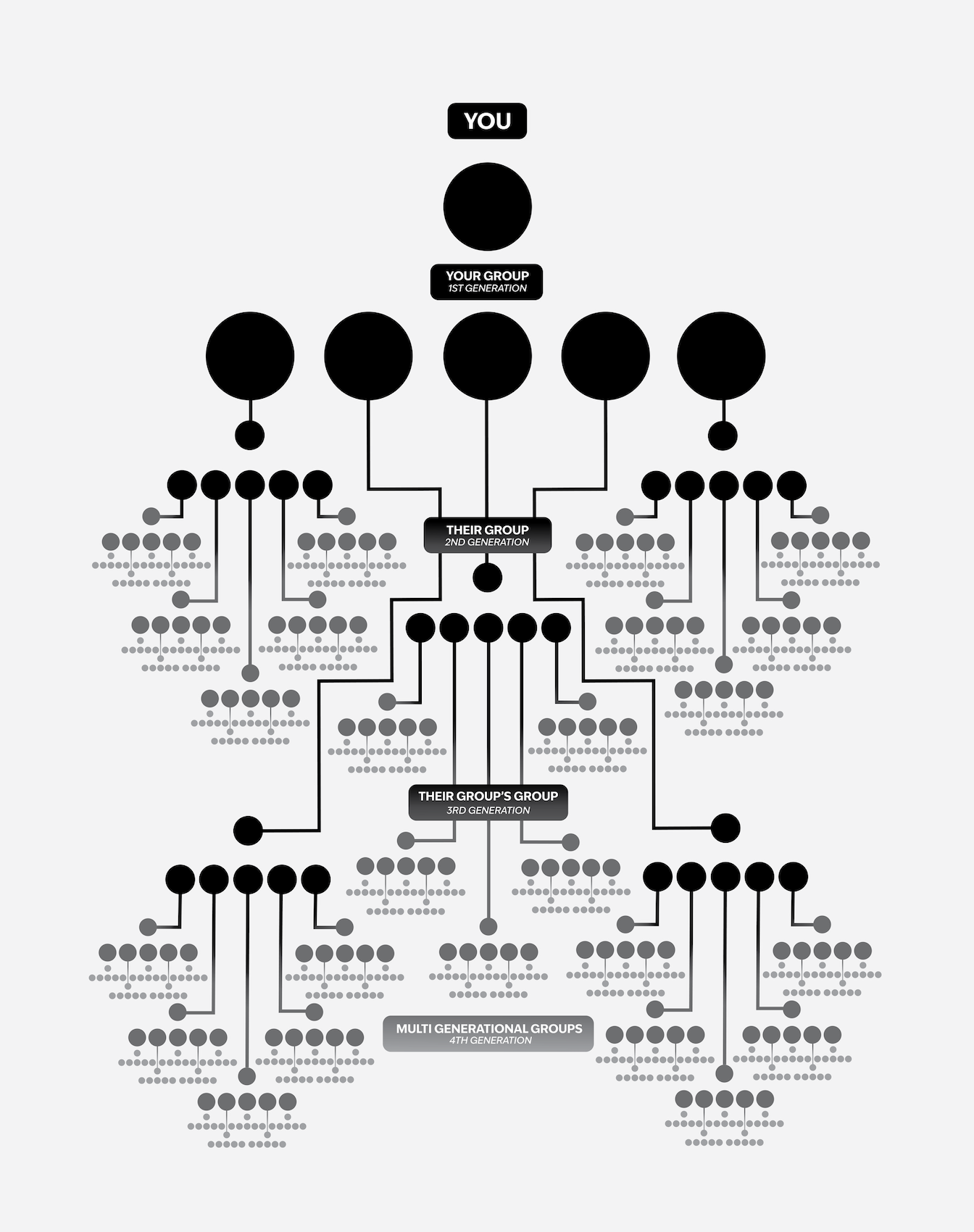
This is what happens when ordinary people grow in intimacy with Jesus and step into the calling that flows from that relationship. One yes becomes many. One group becomes a movement.
Phase 5: The Mentorship Model — Discipleship Training That Keeps Going
Most small group models end when the study ends. Ours shifts. The leader becomes a mentor — and that's where the real multiplication happens.
This is where we go against the grain.
Leaders don't just lead a group and move on. They shift into mentors.
In most small group cultures, the leader finishes and fades out. Participants are left hoping a pastor or staff member will help them take next steps. That usually leads to abandonment.
We're inviting something better: become a mentor. Keep investing. Check in on your people. Pray for them. Encourage them. Let them know they're not alone when leading gets hard.
What Mentorship Actually Looks Like
It doesn't require a seminary degree or Yoda-level wisdom. It's simpler than that.
Be available. Let new leaders know they can reach out when they hit obstacles.
Be intentional. Check in regularly. Don't wait for them to come to you.
Pray for them. Cover them in prayer as they step into leadership.
Join them occasionally. Show up to a session or two of their new group to encourage them.
Stay invested through generations. Your concern isn't just that 2nd gen leaders succeed — it's that they help 3rd gen leaders succeed too.
"Mentoring is the intentional relationship with others that causes all parties involved to grow in discipleship." — David Watson, Contagious Disciple Making
Notice: mentorship benefits both parties. As you pour into new leaders, you grow too. Dallas Willard made this point in The Great Omission: the person who disciples others is themselves discipled in the process. It's not a one-way pour. It's a mutual formation.
The Ultimate Vision
There's a level of growth where you have so many people in your life that you've discipled — who are now out discipling others — that you don't have capacity to lead another group yourself. Instead, you're discipling leaders who are discipling others. Just like Paul with Timothy.
This is the highest expression of the model: when your primary contribution to the movement is no longer leading groups, but mentoring those who lead groups. That's how movements scale.
Key Resources
Getting Started
Ordinary Movement Website — Main website
How OM Works (Video) — Explainer video on the full process
How Ordinary Movement Started — The founder's story and why this exists
Launch Guide — Step-by-step guide to starting your first group
Workbook Preview — See 8 of the 27 sessions
After Your Group Finishes
OC Groups Overview — Learn about Ordinary Community groups
Mentorship Vision Podcast — 48-min deep dive on mentoring the next generation
For Churches
Church Discipleship Pathway — How churches implement OM
Common Questions / FAQ — Everything you need to know
Ready to Start Your Discipleship Group?
One yes is all it takes. You don't need to have it all figured out. You just need to be willing. We'll show you how.
About the Author
Ordinary Movement was founded in 2018 by Jeremy McCommons — an entrepreneur with no seminary degree and no ministry background who started with a single discipleship group of 10 men on a video call. Today OM equips ordinary believers across 35+ states to lead small group discipleship and multiply.